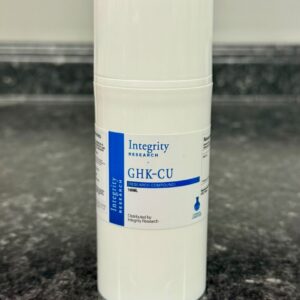

Description
🧬 BPC-157
Precision Peptide for Advanced Research Applications
🧠 Overview
BPC-157 (Body Protection Compound-157) is a synthetic peptide derived from a naturally occurring protein found in gastric juice. It has gained significant attention in the scientific community for its stability, resilience, and broad research potential.
This compound is widely studied for its role in cellular signaling, tissue response, and regenerative pathways, making it a valuable tool in peptide-based research models.
⚗️ Key Research Focus Areas
- Cellular repair mechanisms
- Angiogenesis (blood vessel formation)
- Tissue response and recovery pathways
- Gut-brain axis interactions
- Musculoskeletal research models
BPC-157 is known for its high stability in human gastric conditions, making it uniquely resilient compared to many other peptides.
🔬 Product Specifications
- Compound Name: BPC-157
- Molecular Formula: C₆₂H₉₈N₁₆O₂₂
- Purity: ≥99% (HPLC Verified)
- Appearance: Lyophilized white powder
- Form: Research-grade peptide
- Vial Size Options: 5mg / 10mg / 15mg
🧪 Quality & Testing
Each batch undergoes rigorous third-party analytical testing to ensure:
- High-performance liquid chromatography (HPLC) verification
- Mass spectrometry identity confirmation
- Sterility and endotoxin screening
- Batch-specific Certificates of Analysis (COA)
All products are manufactured in controlled environments following strict quality standards.
📦 Packaging & Storage
- Sealed sterile glass vial
- Protective labeling with lot traceability
- Temperature-stable packaging for transit
Storage Recommendations:
- Store lyophilized peptide at 2–8°C
- Avoid repeated freeze-thaw cycles
- Protect from light and moisture
🧬 Why Researchers Choose BPC-157
✔ Exceptional stability compared to other peptides
✔ Broad application across multiple research models
✔ Strong interest in regenerative signaling pathways
✔ Consistent performance in controlled environments
🚀 Research Applications
BPC-157 continues to be explored in studies involving:
- Tendon and ligament models
- Muscle recovery research
- Gastrointestinal system studies
- Neural pathway research
Its versatility and resilience make it one of the most widely discussed peptides in modern research.
🧾 Certificate of Analysis
Every vial is backed by a verifiable COA, including:
- Purity profile
- Analytical methods
- Lot number tracking
- Independent lab validation
(COA available upon request or via QR code on packaging)
⚠️ Important Notice
- For research use only
- Not for human consumption
- Not intended to diagnose, treat, cure, or prevent any disease
Enhance your research stack with:
- TB-500 (Thymosin Beta-4 fragment)
- GHK-Cu (Copper peptide complex)
- PEG-MGF (Mechano Growth Factor)
🧬 BPC-157 — Potential Benefits (Research Overview)
🦴 1. Tissue Repair & Regeneration
BPC-157 is best known for its strong association with tissue healing pathways.
Observed in research:
- Accelerated healing of tendons and ligaments
- Improved muscle recovery after injury
- Enhanced repair of damaged tissue structures
- Faster wound closure in experimental models
👉 This is the primary reason it’s widely studied.
🩸 2. Angiogenesis (Blood Vessel Formation)
BPC-157 appears to promote the formation of new blood vessels.
Why this matters:
- Improves nutrient and oxygen delivery to tissues
- Supports healing in damaged areas
- May enhance recovery speed overall
🧠 3. Neuroprotective Effects
There is growing interest in BPC-157’s effects on the nervous system.
Research suggests:
- Protection of nerve cells in injury models
- Support for dopamine and serotonin pathways
- Potential role in brain recovery after trauma
💪 4. Muscle Recovery & Performance Support
Studied in relation to muscle repair and function.
Potential effects:
- Faster recovery after strain or damage
- Reduced downtime between stress events
- Support for muscle integrity
🦵 5. Joint, Tendon & Ligament Support
One of the most talked-about areas.
Research observations:
- Improved tendon-to-bone healing
- Increased collagen organization
- Stronger structural repair in connective tissue
🩹 6. Anti-Inflammatory Effects
BPC-157 may help regulate inflammatory responses.
Potential outcomes:
- Reduced localized inflammation
- Support for faster recovery environments
- Modulation of inflammatory signaling pathways
🧬 7. Gastrointestinal Protection & Repair
This is where BPC-157 originates (gastric peptide).
Strong research focus:
- Protection of stomach lining
- Healing of ulcers in animal studies
- Support for intestinal integrity
- Potential benefits for gut permeability models
❤️ 8. Cardiovascular Support (Experimental)
Some studies show effects on vascular systems.
Observed:
- Protection of blood vessels
- Improved circulation in damaged tissue models
- Interaction with nitric oxide pathways
🧪 9. Nitric Oxide (NO) Regulation
BPC-157 appears to interact with the NO system.
Why it matters:
- Influences blood flow
- Plays a role in healing and vascular function
- May help balance vasodilation responses
🧠 10. Stress & Neurochemical Balance (Preclinical)
Early research suggests interaction with brain chemistry.
Potential effects:
- Modulation of dopamine pathways
- Interaction with serotonin systems
- Reduced stress-response markers in animal models
⚡ 11. Recovery From Physical Stress
Studied in models involving high physical stress or injury.
Observed:
- Improved resilience to damage
- Faster return to baseline function
- Protection against repeated stress exposure
🧬 12. Organ Protection (Preclinical Research)
Some studies explore systemic protective effects.
Includes:
- Liver protection in toxic exposure models
- Brain protection after injury
- Gut and vascular system support
🔥 Summary (High-Level)
BPC-157 is primarily studied for:
✔ Tissue healing & regeneration
✔ Tendon/ligament repair
✔ Gut protection
✔ Blood vessel formation
✔ Anti-inflammatory effects
✔ Neuroprotective potential
CLICK HERE TO Contact us with any questions!
NENMASS@GMAIL.COM
508-809-3469